
For landlords
Are smoke detectors mandatory? The Dutch rules for landlords
Since 1 July 2022, every home in the Netherlands must have smoke detectors, including existing rental properties. As a landlord you are the one responsible for installing them. This guide covers what the law requires, which detector to choose, where to place it, and how the responsibility is shared with your tenant.
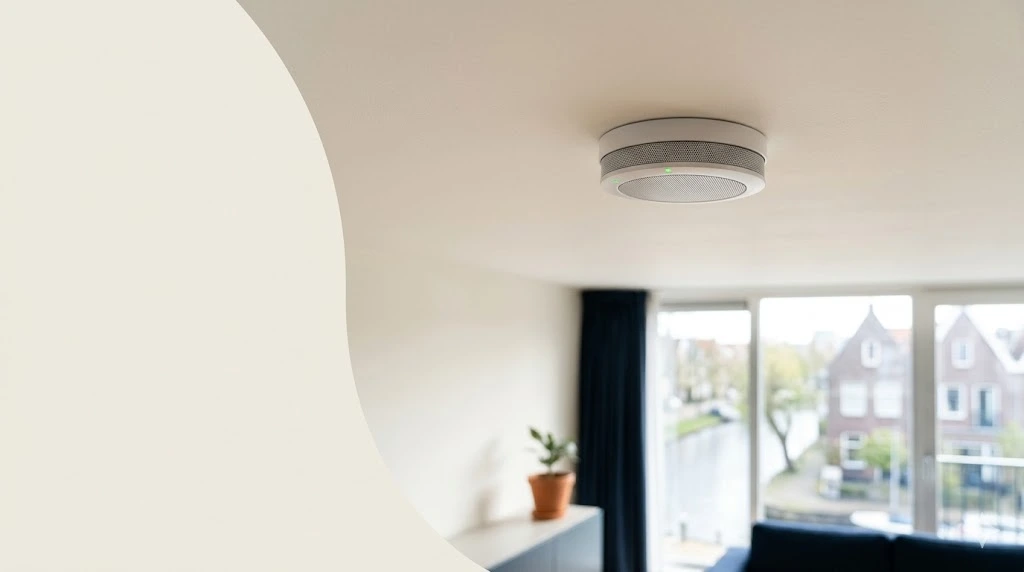
Key takeaways
- Smoke detectors have been mandatory in all Dutch homes since 1 July 2022, including existing rentals.
- The landlord installs the detectors; the tenant helps with checks and battery replacement.
- You need a detector on every floor with a living room, bedroom or kitchen.
- Choose a CE-marked detector that meets EN 14604, ideally with a 10-year lithium battery.
- Replace any detector after 10 years, and replace ionic models, which can no longer be sold.
Smoke detectors have been mandatory for all rental properties since 1 July 2022. For newly built properties the obligation had already been in effect for some time, but the same rules now apply to existing real estate as well. The law requires a smoke detector on every floor of the home that has a living room, bedroom or kitchen. The question many owners ask is simple: who installs them, the tenant or the landlord?
The landlord is responsible for installing smoke detectors
The owner or landlord must install smoke detectors in a rental property. The tenant does have to cooperate with installing, checking and, when needed, replacing the batteries. In that sense the responsibility for smoke detectors is shared between tenant and landlord, but the obligation to fit them sits with you as the owner.
Why smoke detectors are mandatory
The rule exists to reduce the number of people who die in house fires. Most victims of domestic fires are caught at night, by smoke inhalation, because your sense of smell does not work while you sleep. A smoke detector closes that gap: it picks up the smoke and sounds an alarm, and your hearing still works well when you are asleep.
How to choose the right smoke detector
A smoke detector must carry a CE marking and meet the European EN 14604 standard, which sets strict rules for how detectors are produced and sold. Check both of those first.
After that, the most important difference is the battery: lithium or regular. Lithium batteries last about 10 years. Regular batteries need replacing roughly once a year, which is inconvenient at the best of times and more so when you do not live in the property yourself. For a rental, we recommend a detector with a lithium battery.
Why you have to replace a detector after 10 years
European standards require smoke detectors to be replaced every 10 years. Over time the part that detects smoke becomes contaminated with dust, so the detector responds less accurately. It may pick up smoke too late, or set off a false alarm. A detector with a lithium battery has a lifespan of 10 years, which lines up neatly with the lifespan of the detector itself.
Do you still have an ionic detector?
Today you can only buy optical smoke detectors, which work with an infrared light beam. Until the end of 2005, ionic detectors were also sold; these use slightly radioactive charged particles and are very polluting, which is why their sale was prohibited by law in the Netherlands in 2005.
If you still have an ionic detector in your home, its technical lifespan is 10 years, so by definition it should be replaced by now. The presence or replacement of these detectors does not pose a danger to your health, but do dispose of any removed detector as small chemical waste.
Where to place your smoke detectors
Placement must follow the conditions set by the NEN2555 safety standard. A few points matter for whether the detector actually works:
- Place a detector on the ceiling, in the middle of the room, if you can. Smoke rises and gathers at the top of the room against the ceiling, so a ceiling-mounted detector reacts faster than one on the wall.
- In a hallway, place the detector at the highest point, at the top of the stairs. Keep a safe distance from the stairs so you can place, test or replace it safely.
- Keep the detector about half a metre from the wall. Smoke forms a "blind spot" in the corner between wall and ceiling, where it reaches the detector late or not at all.
- Keep detectors away from other objects on the ceiling, such as light boxes or lampshades. These create the same blind-spot effect and stop the detector working properly.
- Avoid spots near ventilation openings or a heater. The air currents they create can affect how the detector works.
For more on how and where to place detectors, the Dutch Fire Brigade page is a good reference.
What else to know when installing them
- You need a detector on every floor with a living room, bedroom or kitchen. A detector is not mandatory for attics or basements used only for storage.
- Read the user manual carefully before mounting the detector, and test it regularly.
- Set a reminder for the next battery change, and stick a label with the date of the last change on the detector itself.
- In larger properties, choose detectors that can connect to one another, so they all sound when one is triggered. Some detectors also connect to your phone, so you are warned even when you are not home.
- The Owners' Association (VvE) has no role in installing detectors. As an owner you are responsible for this in your own home, and there are no guidelines for detectors in common areas.
Smoke detectors and property management
If Balatin or another party manages your property, the responsibility for installing smoke detectors still rests with you as the owner. What we can do is take the work off your hands: as your property manager, we arrange for a recognised company to come to the property and fit the detectors correctly.
If you want help with this, or want to know what managing your rental with us involves, you can list your property or contact us directly.
Frequently asked questions
The landlord installs the smoke detectors. The tenant has to cooperate with installing, checking and replacing the batteries, so the day-to-day responsibility is shared, but the duty to fit them sits with the owner.
Rent out with confidence
Reach verified international tenants and stay informed from listing to checkout.
Keep reading
Rules and regulations for renting out your property
Dutch rental law for landlords: rent protection, contract types, rent caps under the points system, allowed increases, energy labels and smoke detectors.
How to rent out your property to expats in Amsterdam
A step-by-step guide to renting out a house, apartment or studio in Amsterdam, from setting the rent to the check-in, plus the rules that apply.