
For landlords
Rules and regulations for renting out your property
Renting out a home in the Netherlands means working within tenant-protection law, regulated rent levels and a few practical obligations for the property itself. Get any of these wrong and the consequences can be serious, so here is what actually applies before you put your home on the market.
Key takeaways
- Dutch tenants enjoy strong rent protection; choose the contract type that fits your situation before signing.
- Since 1 July 2024, temporary rental is restricted to specific cases, while interim rental for owners staying abroad remains available.
- The points system caps rent up to 186 points (€1,184.82 per month, 2025 level); 187 points or more allows private-sector renting.
- Rent may rise once a year; private-sector increases for 2024 are capped at 5.5%.
- You must provide an energy label, and smoke detectors have been mandatory in all homes since 1 July 2022.
If you want to rent out your property, there are laws and regulations you have to comply with, and ignoring them can carry serious consequences. So what exactly are the rules for renting your home to an international tenant?
- Much of it comes down to the Dutch laws written to protect tenants. If you only want to rent out your home temporarily, take this into account and choose the right rental contract.
- Once your home is on the market, you also need to know the rules on rent levels and rent increases.
- On top of that, a few rules apply to the property itself. We cover all of this below.
Rent protection
In the Netherlands, a tenant is in many cases entitled to rent protection. This means a landlord cannot simply evict a tenant. A common worry among owners is being unable to get a tenant out of the property when they want to use it again after a set period. With temporary rent, a tenant has limited rental protection. The rules for temporary rent were tightened as of 1 July 2024.
Temporary rental
Until 1 July 2024, the general rule was that a landlord could grant a temporary rental contract once, with a minimum duration of 6 months and a maximum of 2 years. From 1 July 2024 onwards, temporary rental has been severely restricted and is only permitted in specific cases. To read about these exceptions, see our guide to the new rental rules.
Pay close attention here. A fixed-term agreement expires automatically, but as a landlord you must remind your tenant of the end date in good time, namely 1 to 3 months before it. If you do not, the contract automatically becomes a rental contract for an indefinite period. As a landlord, you may not terminate the agreement earlier than the date stated in it. In a temporary rental situation, the tenant has a notice period of at most 1 calendar month.
Interim rental
Alongside the temporary rental contract, there is an option for so-called interim rental. This is intended for landlords who stay abroad for a set period. A fixed duration is first agreed, between 6 months and 2 years, and during this period the rent cannot be cancelled by either side. After this initial period, the agreement can be extended for a mutually agreed term. During this extension, the tenant has a notice period of 1 month, and the landlord a minimum of 3 months.
Interim rental continues to exist even under the new legislation. For more on the rules that apply from 1 July 2024, read our guide to the new rental rules for 2024.
What rent can I ask for my property?
Rent protection for tenants in the regulated sector has existed in the Netherlands for a long time. A points system determines the maximum rent for a property. Homes with a rent below this limit (143 home-valuation points, equal to a rent of €879.66 in 2024) fall under the regulated rental system. Within this system, tenants have rent-price protection: a tenant can ask the Rental Committee to assess whether the monthly rent is too high. If the calculation shows it is, the landlord must reduce the rent.
Mid-rental sector
As of 1 July 2024, the points system was expanded from 143 to 186 points (equal to €1,184.82 per month, 2025 price level) through the Affordable Rent Act. This also caps the rent of the so-called mid-rental segment. In practice, properties with a points total of 144 to 186 points are now subject to a regulated rent. If your home falls into this category, it will most likely have a major influence on the rent you can charge.
Private-sector rentals
Properties with 187 points or more under the property-valuation system are eligible for renting in the private sector. At the moment, rents above this liberalisation limit are not regulated, so it is important to be sure your property has enough points. After signing the contract, tenants can have the property assessed by the Rental Committee. If the calculation shows the property belongs to the regulated part of the market, the tenant can still force a lower rent. The new law also gives municipalities the authority to enforce appropriate rents from 1 January 2025 onwards, and they can impose fines if needed.
Rent increases: how often and how much?
Under the rules, the rent of a home may be increased no more than once a year, and it may not exceed the maximum rent discussed above (for the regulated part of the market). In the private sector, rent may also be increased only once a year. The tenant must be informed at least 1 month in advance. There are a few exceptions to the annual increase:
- On 1 July, the rent may be increased even if the lease is less than a year old.
- If the home has been significantly improved, an additional rent increase may be applied.
- If more than 12 months passed between previous rent increases, for example because an increase was announced too late, the rent may still be increased again in July.
Rules for rent increases in the private sector
The Act on Maximising Rent Price Increases in Liberalised Rental Agreements states that, until 2029, the permitted rent increase in the private sector is linked to inflation (plus 1 percentage point) if this is lower than wage development. This percentage is set annually.
Inflation was lower last year, at 4.5%, so the permitted annual rent increase for 2024 in the private sector is a maximum of 5.5%.
Energy label: required for renting out
Landlords must make an energy label available to the tenant when renting out. Your home may already have a valid label. If not, you can request one from an energy advisor.
Smoke detectors
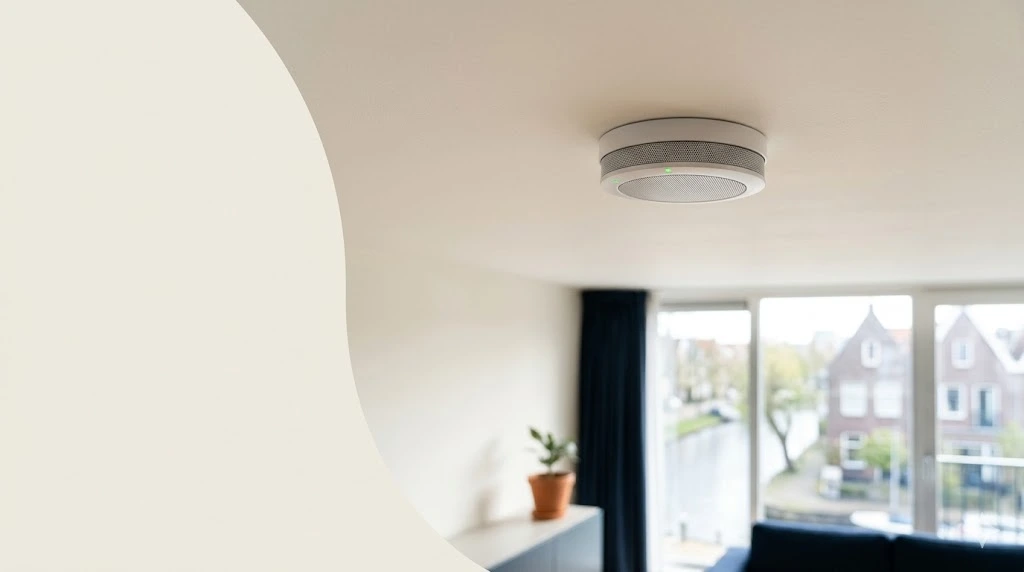
Since 1 July 2022, smoke detectors have been mandatory in both existing and new homes. The owner or landlord is responsible for installing them. Tenants must cooperate with the installation, inspection and, where needed, replacement of the batteries. For more on this, read our guide on whether smoke detectors are mandatory.
Want to know more?
The rental market and the rules that apply to it change quickly. If you have questions about renting out your home, or you would like to schedule an intake, contact Balatin or list your property to see how we work.
Rent out with confidence
Reach verified international tenants and stay informed from listing to checkout.
Keep reading
How to rent out your property to expats in Amsterdam
A step-by-step guide to renting out a house, apartment or studio in Amsterdam, from setting the rent to the check-in, plus the rules that apply.

Renting out your property: the new 2024 rules
Two laws changed Dutch renting on 1 July 2024: a ban on temporary contracts and an expanded points system that caps mid-segment rents.
Are smoke detectors mandatory? The Dutch rules for landlords
Smoke detectors have been mandatory in every Dutch home since 1 July 2022. Here is what landlords must install, where, and who is responsible.